
Chicken Game: The Ultimate Guide to the Popular Crash Game
The Chicken game has emerged as one of the most captivating entries in the crash/instant game category, offering players a thrilling combination of strategy, risk management, and potential rewards. This road-crossing themed game challenges players to guide a chicken across a grid whilst avoiding hidden bones that could end your round instantly. With its simple yet engaging mechanics, provably fair technology, and adjustable risk levels, Chicken has quickly gained popularity amongst casual players and serious gamblers alike.
In this comprehensive guide, we’ll explore everything you need to know about the Chicken game, from its basic concept and technical specifications to advanced strategies and psychological aspects. Whether you’re completely new to crash games or looking to refine your approach, you’ll find valuable insights to enhance your Chicken game experience. Before risking real money, you can try the Chicken game free demo on urbangame1.com to practice your strategy and get comfortable with the mechanics.
Let’s dive into the world of this addictive instant win game and discover why players are flocking to test their nerve in the ultimate road-crossing challenge.
Game Overview: What Is the Chicken Game?

Chicken is a popular crash/instant win game developed by several leading providers including Turbo Games, Spribe, and BGaming. At its core, Chicken belongs to the growing category of “crash games” – simple yet highly engaging gambling experiences where players must decide when to cash out before losing everything. Unlike traditional casino games with fixed rules, Chicken puts you in control of your risk level, creating a uniquely personal gambling experience.
The game features a charming farm-themed design with a cartoon chicken protagonist attempting to cross a grid (representing a road) whilst avoiding hidden bones (mines). Each successful step increases your multiplier, but hitting a bone ends the round and loses your entire bet. This creates an escalating tension as you decide whether to continue for higher rewards or cash out with your current winnings.
What makes Chicken particularly appealing is its transparency through provably fair technology, allowing players to verify the randomness of each round. The game also offers customizable grid sizes and risk levels, making it accessible to both cautious players and high-risk thrill-seekers. You can test all these features without risk by trying the Chicken game free demo on urbangame1.com before playing with real money.
Game Concept: How Chicken Works
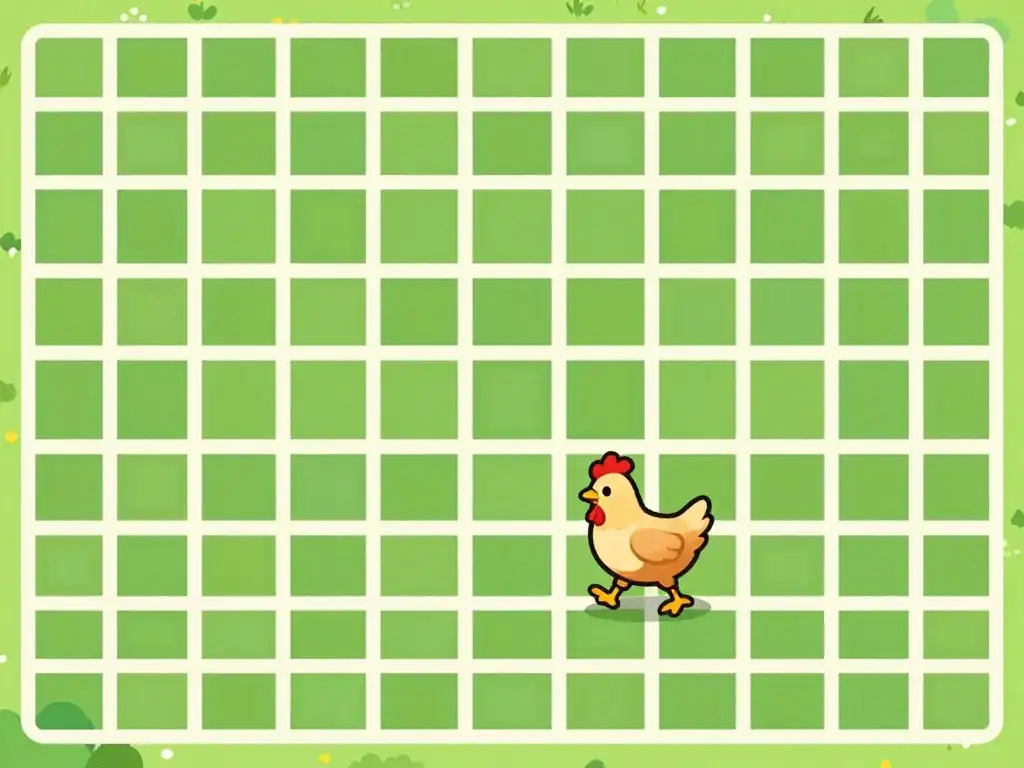
The concept behind the Chicken game is brilliantly simple yet endlessly engaging. You control a chicken attempting to cross a grid-based road while avoiding hidden bones. The game begins when you place your bet and select your preferred risk level and grid size. Then, you start revealing tiles one by one – finding a chicken means that tile is safe, while finding a bone ends the round and costs you your bet.
With each safe tile you reveal, your potential payout multiplier increases. The critical decision comes after each successful step: do you cash out with your current winnings, or risk everything for a higher multiplier on the next tile? This creates the psychological heart of the game – the constant tension between greed and caution that makes crash games so addictive.
What separates Chicken from other similar games is its charming farm theme and intuitive interface that makes the high-stakes decisions feel approachable and fun. The game also features provably fair technology, ensuring that the placement of bones on the grid is truly random and cannot be manipulated by the casino. This transparency has helped Chicken build trust with players who appreciate knowing they’re getting a fair chance.
Technical Specifications: The Numbers Behind Chicken Game
| Feature | Details |
| Game Type | Instant/Crash Game |
| Developers | Turbo Games, Spribe, BGaming, others |
| Theme | Chicken Road Crossing |
| Grid Sizes | Variable (3×3 to 5×5+) |
| RTP Range | 95% – 99% (depends on risk level) |
| Risk Levels | Easy, Medium, Hard, Expert |
| Min Bet | £0.10 |
| Max Bet | £100+ (varies by casino) |
| Max Multiplier | 100x+ (depends on grid and risk) |
| Provably Fair | Yes |
| Auto Mode | Available |
The Chicken game offers impressive technical flexibility that adapts to different player preferences. Grid sizes typically range from 3×3 for quick rounds to 5×5 or larger for extended gameplay with higher potential multipliers. The RTP (Return to Player) percentage varies based on your chosen risk level, ranging from approximately 95% on Expert difficulty to 99% on Easy mode.
One of the most important technical aspects of Chicken is its implementation of provably fair technology. This system uses cryptographic verification to ensure that game outcomes cannot be manipulated by either the casino or the player. Before each round, a combination of server seed (from the casino) and client seed (from the player) generates a truly random grid layout that can be verified after the round concludes.
The game also features both manual and automatic play modes. In manual mode, you personally select each tile to reveal, while auto mode allows you to pre-set a number of tiles to automatically reveal or a target multiplier for automatic cashout. This flexibility makes Chicken accessible to different playing styles and strategies. You can experiment with all these technical features risk-free by trying the Chicken game demo on urbangame1.com.
Theme and Design: The Chicken Road Crossing Aesthetic

The Chicken game employs a charming farm-themed aesthetic that adds personality to what could otherwise be a purely mathematical experience. The central character – a cartoon chicken attempting to cross the road – gives the game an approachable, lighthearted feel despite the high-stakes gambling mechanics underneath. This design choice makes the game appealing to casual players who might be intimidated by more serious-looking crash games.
The visual elements typically include a rural farm backdrop with fences, barns, and countryside scenery that contextualizes the chicken’s journey. The grid itself is usually designed to represent a road or pathway, with revealed safe tiles showing the chicken character and dangerous tiles displaying bones. This clear visual language makes the game intuitive even for first-time players.
Color schemes tend toward bright, cheerful palettes with greens, blues, and yellows dominating the landscape, while the chicken character often features vibrant orange or yellow feathers. This positive visual tone helps balance the tension of the gameplay, creating an enjoyable atmosphere even when the stakes are high. The bones that represent danger are typically stylized rather than realistic, maintaining the game’s cartoonish charm.
Graphics and Sound: The Audiovisual Experience

The Chicken game delivers a polished audiovisual experience that enhances its addictive gameplay. The graphics are intentionally simple and clean, focusing on clarity rather than complexity. This minimalist approach ensures that the game runs smoothly across all devices, including mobile phones and tablets, without sacrificing visual appeal. The cartoon-style chicken character is typically animated with personality, celebrating successful moves and reacting dramatically to losses.
Sound design plays a crucial role in building tension throughout each round. Background music often starts calm but gradually intensifies as you reveal more safe tiles and your multiplier increases. Sound effects mark each successful step with a positive chime or cluck, while discovering a bone triggers a distinctive failure sound that players quickly learn to dread. Some versions also include encouraging voice clips or chicken sounds that add personality to the experience.
The audiovisual elements work together to create a psychological roller coaster that makes each round exciting. As you progress further into the grid, both visual and audio cues subtly encourage you to cash out, creating that signature tension that makes crash games so engaging. The clean interface ensures that important information like your current multiplier, bet amount, and cashout button are always clearly visible, allowing you to make split-second decisions when the pressure mounts.
How to Play: Step-by-Step Guide to Chicken Game
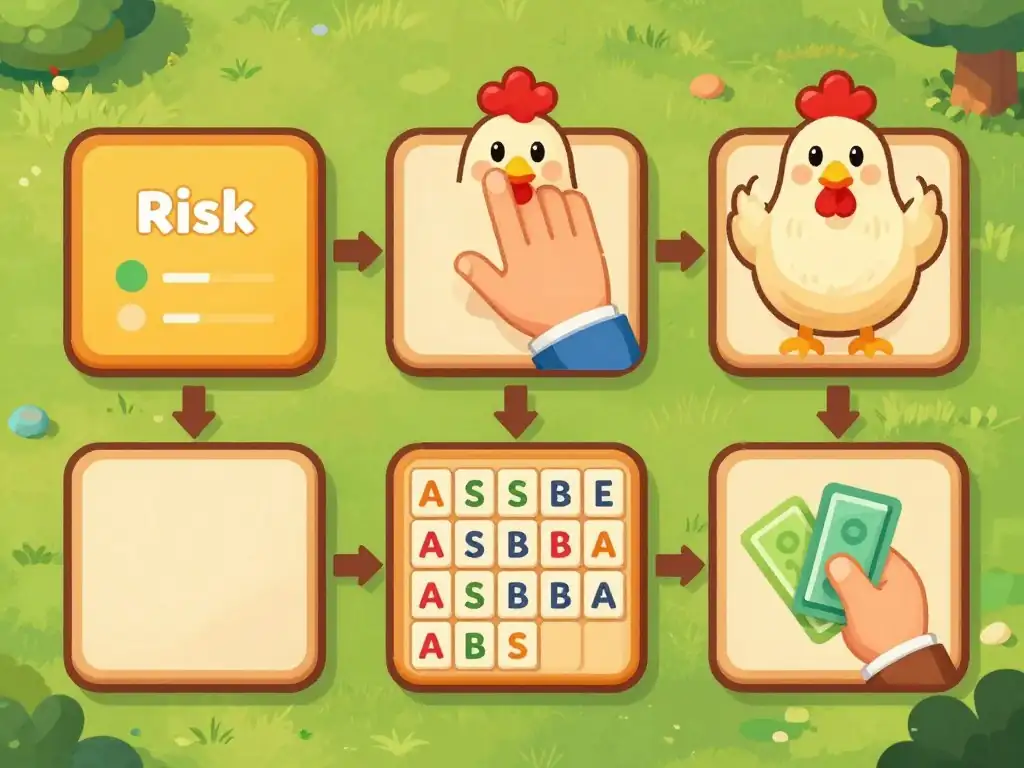
Playing the Chicken game is straightforward, but mastering it requires strategy and nerve. Here’s a comprehensive guide to get you started:
- Select your risk level (Easy, Medium, Hard, or Expert) – this determines how many bones will be hidden in the grid and affects your potential multipliers.
- Choose your grid size – larger grids offer higher potential multipliers but increase the likelihood of hitting a bone.
- Set your bet amount – always gamble responsibly and never bet more than you can afford to lose.
- Begin revealing tiles by clicking on them – each tile will show either a chicken (safe) or a bone (game over).
- With each safe tile revealed, your multiplier increases – the exact amount depends on your chosen risk level and grid size.
- After each successful reveal, decide whether to cash out with your current winnings or continue for a higher multiplier.
- If you reveal a bone at any point, you lose your entire bet and the round ends.
- If you choose to cash out, you receive your original bet multiplied by the current multiplier.
The key to success lies in knowing when to cash out. As you reveal more safe tiles, the probability of hitting a bone increases, creating an escalating risk curve. This makes each decision more tense than the last, especially on higher difficulty levels where bones are more numerous. You can practice this decision-making process without financial risk by trying the free Chicken game demo on urbangame1.com, which offers the full gameplay experience without requiring real money bets.
Risk Levels Explained: From Easy to Expert
| Risk Level | Bones on Grid | RTP | Multiplier Potential | Difficulty |
| Easy | Low (2-3) | ~99% | Low (2x-5x typical) | Beginner-friendly |
| Medium | Moderate (4-6) | ~98% | Medium (5x-20x) | Balanced |
| Hard | High (7-10) | ~97% | High (20x-50x) | Experienced |
| Expert | Very High (10+) | 95-96% | Very High (50x-100x+) | High risk |
One of the most distinctive features of the Chicken game is its adjustable risk levels, which allow players to customize their experience based on their risk tolerance and goals. Each level fundamentally changes the game by altering the number of bones on the grid, which directly impacts both the RTP percentage and the potential multipliers you can achieve.
Easy mode is perfect for beginners or conservative players, featuring just 2-3 bones on the grid. This creates a high RTP of approximately 99%, meaning the house edge is only about 1%. The trade-off is that multipliers tend to be modest, typically ranging from 2x to 5x your original bet. This mode allows for extended play sessions with a lower risk of quickly depleting your bankroll.
Medium mode strikes a balance between safety and reward potential, with 4-6 bones scattered throughout the grid. The RTP drops slightly to around 98%, but the potential multipliers increase significantly, often reaching 5x to 20x. This is the most popular setting for regular players who want a mix of excitement and reasonable winning chances.
Hard mode introduces 7-10 bones to the grid, creating a challenging environment where mistakes are costly. The RTP decreases to approximately 97%, but successful navigation can yield impressive multipliers between 20x and 50x. This mode is recommended for experienced players who understand the probabilities and have developed effective strategies.
Expert mode is for true risk-takers, featuring 10 or more bones depending on grid size. The RTP drops to 95-96%, giving the house a 4-5% edge, but the potential rewards are enormous, with multipliers potentially exceeding 100x for those brave (or lucky) enough to navigate the dangerous grid. This mode creates maximum tension and excitement but should be approached with caution.
You can experiment with all four risk levels without financial commitment by trying the Chicken game demo on urbangame1.com, allowing you to find the perfect balance of risk and reward for your playing style.
Grid Customization: Tailoring Your Challenge

Beyond selecting your risk level, the Chicken game offers grid customization options that further personalize your gaming experience. Most versions allow you to choose from several grid configurations, typically ranging from compact 3×3 layouts to expansive 5×5 or even larger grids. This choice significantly impacts both gameplay duration and potential rewards.
Smaller grids like the 3×3 configuration offer quicker rounds with fewer decisions but also limit your maximum potential multiplier. These compact layouts are perfect for players who prefer fast-paced action or are playing in short bursts. The limited number of tiles means you’ll reach either a bone or the grid’s edge relatively quickly, keeping rounds brief and decisions immediate.
Medium-sized 4×4 grids strike a balance between speed and reward potential. With 16 tiles to potentially reveal, these layouts offer more decisions per round and higher multiplier ceilings than 3×3 grids. This size is popular among regular players who want a substantial challenge without committing to lengthy rounds.
Larger 5×5 grids and beyond provide the highest potential multipliers but require more time and nerve to navigate successfully. With 25 or more tiles, these expansive layouts create extended rounds with numerous decision points, allowing multipliers to climb dramatically if you can avoid the bones. However, the psychological pressure increases with each tile, making these large grids particularly challenging from a decision-making perspective.
Some advanced versions of the game even allow custom grid shapes beyond the standard square, such as rectangular layouts or irregular patterns that add another layer of strategic consideration. When combined with different risk levels, these grid options create dozens of possible game configurations, ensuring the experience remains fresh and engaging over time.
Multiplier System: How Rewards Build in Chicken Game

The heart of the Chicken game’s excitement lies in its multiplier system, which creates the risk-reward tension that makes each decision meaningful. Unlike fixed-odds casino games, Chicken features a dynamic multiplier that increases with each safe tile you reveal, creating an escalating potential reward that tempts you to continue despite growing risk.
The exact multiplier growth formula varies between different providers’ versions of the game, but it generally follows a mathematical progression that accelerates as you reveal more safe tiles. Early tiles might only increase your multiplier by small increments (perhaps 0.2x or 0.3x), but later tiles in the same round can add substantially more (1x, 2x, or even higher), creating a snowball effect that makes late-game decisions particularly tense.
Your chosen risk level directly impacts the multiplier growth rate. On Easy mode, multipliers grow more slowly but steadily, while Expert mode features aggressive multiplier increases that can quickly reach impressive heights. This relationship between risk and reward is carefully balanced to maintain the same house edge across different difficulty settings – higher risk levels offer bigger potential rewards precisely because they’re less likely to be achieved.
The maximum theoretical multiplier depends on your grid size and risk level, but can potentially exceed 100x on larger grids with Expert difficulty. However, the probability of revealing every safe tile on such a grid is extremely low, making these massive multipliers rare but exciting possibilities that keep players engaged. The multiplier is displayed prominently throughout gameplay, creating a constant visual reminder of what you stand to win – or lose – with your next decision.
Manual vs Auto Mode: Different Ways to Play

The Chicken game offers two distinct playing modes that cater to different preferences and strategies: manual mode and auto mode. Each provides a unique experience and comes with its own advantages and considerations for serious players.
In manual mode, you personally select each tile to reveal, maintaining complete control over your journey across the grid. This traditional approach allows for intuitive decision-making, where you can respond to your changing risk tolerance as the round progresses. Many players prefer this hands-on experience for the psychological engagement it provides – the tension of hovering over a tile, the satisfaction of revealing a safe spot, and the ability to change strategy mid-round based on intuition or pattern recognition (even though the grid is truly random).
Auto mode, by contrast, allows you to pre-set parameters for automated play. Typically, you can specify either a target number of tiles to reveal or a target multiplier to reach before automatically cashing out. Once configured, the game will automatically reveal tiles in sequence until either hitting your target, encountering a bone, or completing the grid. This removes the emotional element from decision-making, enforcing a disciplined approach that can be valuable for players who struggle with the “one more tile” temptation that often leads to losses.
From a strategic perspective, manual mode offers flexibility but exposes you to psychological biases, while auto mode provides consistency but lacks adaptability. Many experienced players use a hybrid approach – testing strategies in auto mode to establish baseline performance, then switching to manual mode for the full experience once they’ve developed confidence in their approach. You can experiment with both modes risk-free by trying the Chicken game demo on urbangame1.com before committing to real money play.
Cashout Strategy: Knowing When to Stop

Developing an effective cashout strategy is perhaps the most crucial skill in mastering the Chicken game. Since the game allows you to collect your winnings at any point before hitting a bone, knowing when to cash out directly determines your long-term success. This decision-making process combines mathematical probability with psychological discipline.
The fundamental challenge lies in the changing risk profile as you progress through the grid. With each safe tile you reveal, two competing factors come into play: your multiplier increases (making continuation more rewarding), but the probability of hitting a bone on the next tile also increases (making continuation more dangerous). This creates a mathematical inflection point where the expected value of continuing becomes negative, though this point varies based on your risk level and grid size.
Many successful players adopt target-based strategies, deciding in advance on a multiplier goal for each round. For example, you might decide to always cash out at 3x on Easy mode or 10x on Medium mode, regardless of how tempting it might be to continue. This approach removes emotional decision-making from the equation and helps maintain discipline during both winning and losing streaks.
Another popular approach is the progressive strategy, where you adjust your target based on your bankroll status. When ahead, you might play more conservatively to protect your winnings; when behind, you might take greater risks to recover losses. However, this requires careful balance to avoid the common pitfall of chasing losses with increasingly desperate plays.
The most sophisticated players combine these approaches with an understanding of the mathematical probabilities specific to each game state. By calculating the exact odds based on the number of revealed tiles, remaining safe tiles, and known bone count for your risk level, you can make decisions that maximize expected value over time. While this approach requires more analysis, it can provide an edge for serious players committed to optimizing their results.
Provably Fair Technology: Ensuring Transparency

One of the most important features of the Chicken game is its implementation of provably fair technology, a cryptographic system that ensures complete transparency and fairness in game outcomes. This technology allows players to independently verify that each round’s results were genuinely random and not manipulated by the casino, addressing a common concern in online gambling.
The provably fair system works through a combination of three key elements: a server seed (generated by the casino), a client seed (provided by or available to the player), and a nonce (a number that increases with each game round). Before each round begins, these elements are combined using cryptographic hash functions to determine the placement of bones on the grid. Importantly, this determination happens before you place your bet or make any decisions, ensuring the outcome cannot be altered based on your actions.
After completing a round, you can verify the fairness by checking the original server seed against a publicly available hash. This verification process confirms that the bone placement was predetermined by the algorithm and not manipulated during play. Most Chicken game providers offer detailed guides on how to perform this verification, though the mathematical concepts can be complex for non-technical players.
The implementation of provably fair technology represents a significant advancement in online gambling transparency. Unlike traditional casino games where players must simply trust that the outcomes are random, Chicken and other provably fair games provide mathematical proof of fairness. This has contributed significantly to the popularity of these games among players who value transparency and want assurance that they’re participating in a genuinely fair gambling experience.
RTP Analysis: Understanding Return to Player
Return to Player (RTP) is a critical metric in understanding the Chicken game’s mathematical structure. Unlike many casino games where RTP is fixed, Chicken offers variable RTP based on your chosen risk level, putting you in control of your long-term expected returns. This unique feature allows players to directly influence the house edge through their difficulty selection.
On Easy mode, the RTP typically reaches approximately 99%, meaning that for every £100 wagered, players can statistically expect to receive about £99 back over time. This translates to a house edge of just 1%, making it one of the most player-friendly options in online gambling. Medium mode reduces the RTP slightly to around 98% (2% house edge), while Hard mode typically offers about 97% RTP (3% house edge). Expert mode features the lowest RTP at approximately 95-96%, giving the house a 4-5% advantage.
This inverse relationship between risk and RTP might seem counterintuitive at first – higher risk levels actually decrease your expected return percentage. However, this is balanced by the potential for much larger individual wins on higher difficulties. While Easy mode offers better long-term returns on average, Expert mode provides the possibility of occasional massive multipliers that can deliver substantial payouts, appealing to players who prioritize winning potential over statistical consistency.
It’s important to understand that RTP represents long-term statistical expectations over thousands of rounds, not guaranteed results for any individual session. Short-term variance can result in outcomes that differ significantly from the theoretical RTP, which is why responsible bankroll management remains essential regardless of your chosen risk level. You can experience the different RTP dynamics firsthand by trying various risk levels in the Chicken game demo on urbangame1.com before committing to real money play.
House Edge: The Casino’s Advantage

The house edge in the Chicken game represents the casino’s mathematical advantage, essentially determining how much of players’ wagers the operator will retain as profit over time. Understanding this concept is crucial for informed gambling decisions, as it directly impacts your long-term expected outcomes regardless of short-term luck.
As discussed in the RTP analysis, the house edge in Chicken varies based on your chosen risk level, ranging from approximately 1% on Easy mode to 4-5% on Expert mode. This means that for every £100 wagered on Easy mode, the casino expects to keep about £1 as profit over time, while on Expert mode, that figure rises to £4-£5. These percentages represent the statistical advantage built into the game’s mathematics through the relationship between bone placement, multiplier growth, and grid size.
Compared to many other casino games, even Chicken’s highest house edge remains relatively competitive. Traditional slot machines typically feature house edges between 5-15%, while games like American Roulette have edges around 5.26%. This favorable comparison helps explain why crash games like Chicken have gained popularity among mathematically-minded players seeking better odds.
It’s worth noting that the house edge applies to your initial wager, not your final cashout amount. This means that even if you successfully build a multiplier and cash out, the house edge was already factored into the game’s design through the probability and distribution of bones on the grid. No strategy can eliminate this built-in advantage, which ensures the casino’s profitability over time despite individual players experiencing winning sessions.
Betting Range: Stakes for Every Budget

The Chicken game accommodates players with varying bankroll sizes through its flexible betting range, typically starting from as little as £0.10 and extending to £100 or more depending on the casino. This wide range ensures that both casual players and high rollers can enjoy the game at stakes that suit their comfort level and budget constraints.
Low-stakes options starting at £0.10-£1 are perfect for beginners learning the game or conservative players who prefer extended play sessions with minimal risk. These modest bets allow for hundreds of rounds even with a limited bankroll, providing ample opportunity to experience the game’s mechanics and develop strategies without significant financial pressure.
Mid-range bets from £5-£25 represent the most popular betting tier, offering a balance between meaningful potential returns and reasonable risk. At these stakes, successful rounds on Medium or Hard difficulty can generate wins substantial enough to be satisfying while keeping losses manageable for average players.
High-stakes options of £50, £100, or more cater to experienced players and those seeking more significant action. At these levels, successful navigation of an Expert difficulty grid can potentially yield returns in the thousands, though the corresponding risk of substantial losses demands careful bankroll management and emotional discipline.
Regardless of your preferred betting level, it’s advisable to start with smaller stakes when first learning the game, gradually increasing as you become more comfortable with the mechanics and develop effective strategies. The Chicken game demo on urbangame1.com offers a risk-free environment to experiment with different betting strategies before committing real money.
Mobile Experience: Chicken on the Go

The Chicken game offers an exceptional mobile experience, with its simple mechanics and clean interface translating perfectly to smaller screens. Most providers have optimized their versions specifically for mobile play, recognizing that many players prefer the convenience of gaming on smartphones and tablets rather than desktop computers.
The touch-based interface works particularly well for Chicken’s core gameplay, as tapping tiles to reveal them feels more intuitive and engaging than clicking with a mouse. The grid layout adapts smoothly to both portrait and landscape orientations, though most players find portrait mode more comfortable for one-handed play. Visual elements scale appropriately to different screen sizes, ensuring that crucial information like your current multiplier and cashout button remain easily visible and accessible.
Performance is another strength of the mobile version, with the game’s relatively simple graphics and calculations running smoothly even on older devices. Load times are typically minimal, and the game consumes less battery power than more graphically intensive casino games, making it suitable for longer play sessions while traveling or away from chargers.
The quick nature of Chicken rounds (often lasting just 30-60 seconds) makes the game particularly well-suited to mobile play, allowing for satisfying gameplay experiences even during short breaks or commutes. This convenience factor has contributed significantly to the game’s popularity, as players can enjoy a few quick rounds whenever they have a spare moment without needing to commit to extended sessions.
Demo Play: Try Before You Bet

Before risking real money on the Chicken game, taking advantage of free demo play is highly recommended for both beginners and experienced players. Demo versions offer the complete gameplay experience with virtual currency, allowing you to learn the mechanics, test strategies, and get comfortable with the risk-reward dynamics without financial consequences.
Urbangame1.com offers an excellent Chicken game demo that perfectly replicates the real-money experience. This free version includes all risk levels, grid customization options, and both manual and auto play modes, providing a comprehensive training ground. The demo uses the same provably fair technology and RTP percentages as the real-money version, ensuring that your practice experience accurately represents what you’ll encounter when playing for actual stakes.
Demo play is particularly valuable for developing and testing cashout strategies. You can experiment with different approaches – such as always cashing out at specific multiplier targets or using more complex probability-based decisions – and track your results over dozens or hundreds of rounds to identify which strategies perform best. This data-driven approach helps remove emotion from the equation and establishes solid foundations for when you transition to real-money play.
Even experienced players benefit from returning to demo mode periodically, especially when trying new strategies or after taking a break from the game. The risk-free environment allows for experimentation with higher-risk approaches that might be too intimidating with real money at stake, potentially uncovering profitable strategies you might otherwise avoid. The Chicken game demo on urbangame1.com is available without registration or download, making it easily accessible whenever you want to practice.
Where to Play: Finding the Best Chicken Game Experience

The Chicken game is available from multiple providers, each offering slightly different implementations with unique features and aesthetics. When choosing where to play, several factors beyond the basic game mechanics are worth considering to ensure the best overall experience.
Turbo Games was among the first developers to popularize the Chicken format and remains a leading provider. Their version features polished graphics, smooth animations, and a user-friendly interface that works well across all devices. Turbo Games’ implementation is widely available at numerous online casinos and typically offers the full range of customization options for risk levels and grid sizes.
Spribe offers another excellent version of Chicken, known for its particularly clean visual design and responsive controls. Their implementation often includes additional features like detailed statistics tracking and enhanced auto-play options that appeal to more analytical players. Spribe’s version also tends to perform exceptionally well on mobile devices, with an interface optimized specifically for touch controls.
BGaming’s Chicken implementation is popular among cryptocurrency users, as many crypto-focused casinos feature their games. Their version emphasizes the provably fair aspects with easily accessible verification tools, appealing to players who prioritize transparency. BGaming also typically offers competitive RTP percentages across all risk levels.
Beyond the specific provider, it’s important to choose a reputable casino with proper licensing, fair terms and conditions, and reliable payment processing. The best operators offer welcome bonuses that can be used on Chicken, though be sure to check the wagering requirements as crash games sometimes have different contribution rates toward bonus clearance.
For risk-free practice, urbangame1.com offers an excellent Chicken game demo that allows you to experience the game without registration or financial commitment. This platform is ideal for learning the mechanics and testing strategies before choosing a real-money casino for actual play.
Chicken vs Mines: Comparing Similar Games
| Aspect | Chicken | Mines |
| Theme | Farm/Road Crossing | Mine Field |
| Symbols | Chicken (safe), Bone (mine) | Diamond (safe), Bomb (mine) |
| Atmosphere | Playful, lighthearted | Tense, explosive |
| Mechanics | Identical core gameplay | Same concept |
| RTP | 95-99% | 95-99% |
| Risk Levels | Easy to Expert | Similar options |
| Popularity | High | Very High |
The Chicken game shares its core mechanics with another popular crash game called Mines, with the primary differences being thematic rather than functional. Understanding these similarities and distinctions can help players decide which version better suits their preferences, or simply appreciate the nuances between these closely related games.
Both games feature identical underlying mathematics and gameplay loops: players reveal tiles on a grid, safe tiles increase a multiplier, dangerous tiles end the round with a complete loss, and players can cash out at any point. Both also offer adjustable risk levels that determine the number of dangerous tiles, customizable grid sizes, and provably fair technology to ensure transparency.
The most obvious difference lies in the thematic presentation. Chicken employs a lighthearted farm theme with a cartoon chicken navigating a road while avoiding bones, creating a playful, approachable atmosphere. Mines, by contrast, uses a more intense minefield theme with diamonds as safe tiles and bombs as dangers, resulting in a slightly more serious tone that some players find more engaging for high-stakes gambling.
Visual and audio design also differ, with Chicken typically featuring brighter colors, more animated characters, and cheerful sound effects compared to Mines’ often darker palette and tension-building audio. These aesthetic differences can influence the psychological experience of playing, even though the underlying mathematics remains identical.
In terms of popularity, both games enjoy widespread availability across many online casinos, though Mines currently maintains a slight edge in overall player numbers. This may be due to its earlier introduction to the market or its more universal thematic appeal. However, many players enjoy both games, switching between them based on mood or simply to experience the same compelling mechanics in different presentations.
Strategy and Tips: Maximizing Your Chicken Game Success

Developing effective strategies for the Chicken game can significantly improve your results over time. While no approach can overcome the built-in house edge entirely, these evidence-based tactics can help maximize your winning potential and extend your bankroll:
- Set clear multiplier targets before starting each round and stick to them regardless of emotion. For example, decide to always cash out at 2x on Easy, 5x on Medium, 10x on Hard, or 20x on Expert.
- Implement a stop-loss limit that ends your session after losing a predetermined amount. Similarly, set a profit target that prompts you to cash out when reached, protecting your winnings from potential reversal.
- Match your risk level to your bankroll size. With a smaller bankroll, favor Easy or Medium modes to reduce volatility; with a larger bankroll, you can afford the higher variance of Hard or Expert modes.
- Track your results across different strategies and risk levels. Many players discover that their intuitive preferences don’t align with their actual performance data.
- Consider using auto mode to enforce discipline, especially if you find yourself frequently deviating from your planned strategy due to emotion.
- Avoid the gambler’s fallacy – each round is independent, and previous outcomes don’t influence future results. A string of losses doesn’t make a win “due,” nor does a winning streak predict continued success.
- Practice bankroll management by betting a consistent percentage of your total funds (1-3% per round is often recommended) rather than fixed amounts, allowing your bet size to scale with your bankroll fluctuations.
- Utilize the free Chicken game demo on urbangame1.com to test new strategies without financial risk before implementing them in real-money play.
Remember that successful Chicken strategy balances mathematical optimization with psychological management. Even the most mathematically sound approach will fail if you can’t maintain the discipline to follow it consistently, so be honest about your tendencies and design strategies that work with your personality rather than against it.
Psychology of Play: The Mental Game Behind Chicken

The psychological aspects of the Chicken game are as important as its mathematics, with several cognitive biases and emotional factors significantly influencing player decisions and outcomes. Understanding these psychological dynamics can help you recognize and counteract potentially harmful patterns in your own play.
Loss aversion – the tendency to feel losses more intensely than equivalent gains – plays a major role in Chicken gameplay. This bias often manifests as excessive caution after experiencing losses, leading to premature cashouts that reduce long-term expected value. Conversely, after winning several rounds, many players become less sensitive to risk and make increasingly aggressive decisions, a phenomenon known as the house money effect.
The sunk cost fallacy affects many players who continue revealing tiles despite unfavorable odds because they’ve already “invested” in the current round. This thinking is particularly dangerous in Chicken, where one wrong move loses your entire bet regardless of how many successful reveals preceded it. Similarly, the gambler’s fallacy – believing that past outcomes influence future probabilities in independent events – can lead to irrational betting patterns based on perceived “streaks” or “due” results.
Perhaps the most powerful psychological element in Chicken is the near-miss effect, where narrowly avoiding a bone creates a dopamine response similar to actually winning. This neurological reaction can be highly addictive, encouraging continued play even during losing sessions. The variable reward schedule – never knowing exactly when a big win might occur – further enhances this addictive potential, similar to the mechanisms that make slot machines so engaging.
To counteract these psychological pitfalls, consider implementing pre-commitment strategies like setting firm cashout targets before each round begins, using auto mode to enforce discipline, taking regular breaks to reset your emotional state, and maintaining a detailed record of your play sessions to identify patterns in your decision-making. The free Chicken game demo on urbangame1.com provides an excellent environment to practice these psychological management techniques without financial consequences.
Similar Games: Exploring the Crash Game Category

If you enjoy the Chicken game, several other crash and instant win games offer similar risk-reward mechanics with different themes and presentations. These games share the core concept of increasing multipliers and player-controlled cashout timing, though each adds unique twists to the formula:
- Mines: As discussed earlier, Mines features nearly identical gameplay to Chicken but with a minefield theme, where players uncover diamonds while avoiding bombs.
- Aviator: This popular crash game displays an airplane flying upward with a continuously increasing multiplier. Players must cash out before the plane flies away (crashes), losing their bet. The visual representation of the climbing multiplier creates a particularly tense experience.
- Crash: The original and most minimalist version simply shows a multiplier line climbing on a graph until it suddenly crashes. Players must cash out before the crash occurs, with no additional mechanics or themes complicating the pure risk-reward decision.
- Plinko: Players drop a ball from the top of a pegboard, watching it bounce unpredictably toward multiplier zones at the bottom. While less directly controlled than Chicken, it offers similar tension as players watch the ball approach potential high-value targets.
- Dice: This simplified crash concept involves betting on whether a dice roll will be over or under a certain value, with adjustable odds and multipliers. The instant nature of the result removes the escalating tension but maintains the risk-reward balance.
- Limbo: Players set a target multiplier and win if a randomly generated number exceeds their target. Higher targets offer bigger potential wins but lower probabilities of success, creating a similar risk-management challenge.
These games appeal to similar player preferences – those who enjoy active participation in risk decisions, transparent mathematics, and the psychological thrill of timing-based cashouts. Many players rotate between several crash games to keep the experience fresh while leveraging their transferable skills in probability assessment and emotional management.
If you’re interested in exploring these alternatives, many are available in demo mode on urbangame1.com alongside the Chicken game, allowing you to experience their different approaches to the crash game concept without financial commitment.
Player Reviews: What Gamers Say About Chicken

Player feedback on the Chicken game reveals consistent themes about its appeal and challenges. Analyzing reviews from various gambling communities and casino forums provides valuable insights into the real-world player experience beyond theoretical mechanics.
Many players highlight the game’s accessibility as a major strength, appreciating how quickly new users can understand the basic concept while still discovering strategic depth over time. The adjustable risk levels receive particular praise for accommodating different player preferences, from conservative gamblers who enjoy extended sessions on Easy mode to thrill-seekers who prefer the high-risk, high-reward nature of Expert difficulty.
The transparency offered by provably fair technology is frequently mentioned as a trust-building feature that distinguishes Chicken from traditional casino games. Players report feeling more confident in the game’s fairness when they can verify the randomness of outcomes, though some note that the verification process itself can be technically challenging to understand.
Critical feedback tends to focus on the game’s addictive potential, with some players acknowledging difficulty maintaining discipline during extended sessions. The “just one more tile” temptation proves particularly challenging, with players reporting that emotional decision-making often overrides their predetermined strategies in the heat of the moment.
Interestingly, many players report enjoying the Chicken theme more than the similar Mines game, finding the lighthearted farm aesthetic less stressful during high-stakes play. This psychological comfort appears to facilitate longer play sessions and greater enjoyment, even though the underlying mathematics remains identical between the two games.
Pros and Cons: Weighing the Chicken Game Experience
Advantages
- Adjustable risk levels accommodate different player preferences
- Provably fair technology ensures transparent outcomes
- Competitive RTP percentages (up to 99% on Easy mode)
- Simple mechanics with quick learning curve
- Engaging gameplay with meaningful player decisions
- Excellent mobile optimization
- Potential for high multipliers, especially on Expert mode
- Free demo widely available for risk-free practice
- Charming theme and approachable presentation
Disadvantages
- Highly addictive gameplay can lead to extended sessions
- All-or-nothing nature means frequent complete losses
- Psychological biases often override rational strategy
- Higher volatility than many traditional casino games
- Limited gameplay variety may become repetitive
- House edge cannot be overcome with skill
- Verification of provably fair results requires technical knowledge
- Risk of significant losses when chasing high multipliers
- Auto mode lacks the flexibility of human decision-making
The Chicken game offers a compelling mix of advantages and challenges that appeal to specific player preferences. Its greatest strengths lie in its transparency, adjustable difficulty, and player agency, creating an experience that feels more skill-based than many casino games despite still maintaining a mathematical house edge. The potential for substantial multipliers provides excitement, while the availability of free demos allows risk-free learning.
However, these strengths are balanced by significant challenges, particularly regarding the game’s psychological impact. The addictive gameplay loop and all-or-nothing outcomes can encourage problematic gambling behaviors in susceptible individuals. The high volatility, especially on harder difficulty settings, means that even skilled players will experience significant bankroll swings that require careful emotional management.
Whether the Chicken game is right for you depends largely on your gambling preferences, risk tolerance, and self-awareness regarding addictive tendencies. Players who enjoy active decision-making, understand probability, and can maintain emotional discipline often find it more engaging than passive casino games. Those who struggle with impulse control or prefer more predictable outcomes might be better served by traditional table games or fixed-odds options.
Final Verdict: Is Chicken Game Worth Playing?

The Chicken game stands as one of the most engaging entries in the crash/instant win category, offering a compelling blend of simplicity, transparency, and player agency that appeals to a wide audience. Its greatest strength lies in putting control directly in players’ hands – from selecting risk levels to deciding when to cash out, every round feels personal and consequential in a way that many casino games don’t achieve.
For players who appreciate mathematical understanding and strategic decision-making, Chicken provides a more engaging alternative to purely luck-based games. The provably fair technology adds a layer of trust that traditional casino games often lack, while the adjustable difficulty settings allow for a customized experience based on individual risk tolerance and goals.
However, the game’s addictive potential cannot be overlooked. The psychological hooks – near-miss experiences, variable rewards, and the constant temptation to reveal “just one more tile” – create powerful engagement that can lead to extended sessions and potential overspending. Responsible play requires self-awareness and discipline that not all players can consistently maintain.
Before committing real money to the Chicken game, we strongly recommend trying the free demo available on urbangame1.com. This risk-free environment allows you to experience the mechanics, test different strategies, and honestly assess whether the game’s psychological aspects align with your gambling temperament. If you decide to proceed to real-money play, start with modest stakes on Easy or Medium difficulty until you’ve developed comfort with the game’s rhythm and volatility.
Ultimately, the Chicken game offers an entertaining and potentially rewarding experience for players who approach it with appropriate expectations, responsible bankroll management, and a clear understanding of its mathematical realities. When played mindfully, it delivers the perfect balance of simplicity, strategy, and suspense that has made crash games increasingly popular in the online gambling landscape.
