
Chicken Road Game: Complete Review & Strategy Guide 2026
Chicken Road Game has emerged as one of the most captivating instant crash games in the online casino world. Developed by InOut Games, this innovative title combines the thrill of risk management with a charming road-crossing theme. Players guide a cartoon chicken across a dangerous road, making critical decisions with each step that could multiply their winnings or end in instant loss. With customizable risk levels, provably fair verification, and RTP rates reaching up to 99%, this game offers both accessibility for beginners and depth for experienced players. This comprehensive review explores everything you need to know about the mechanics, strategies, and mathematics behind this increasingly popular crash game.
Game Overview: What Makes Chicken Road Game Special

Chicken Road Game represents InOut Games’ signature entry into the competitive instant win market. Unlike traditional slots that rely on spinning reels, this crash-style game puts players in control of a plucky chicken attempting to cross a treacherous road. The core gameplay revolves around a 5×5 grid where players must navigate through hidden obstacles (bones) that could instantly end their journey. With each successful step, the multiplier increases, creating an escalating risk-reward dynamic that keeps players on the edge of their seats.
What distinguishes Chicken Road Game from other crash titles is its transparent approach to risk management. Players can customize their experience by selecting anywhere from 1 to 24 bones on the grid, directly affecting both the difficulty and potential rewards. This level of customization allows for tailored gameplay experiences ranging from conservative, low-risk sessions to high-volatility pursuits of massive multipliers exceeding 100x your stake.
The game’s provably fair system ensures complete transparency, allowing players to verify that outcomes are genuinely random and not manipulated. This commitment to fairness, combined with the game’s intuitive interface and engaging theme, has helped Chicken Road Game gain significant popularity among both casual players and serious gamblers looking for a refreshing alternative to traditional casino games.
InOut Games: The Developer Behind the Innovation
InOut Games has established itself as a forward-thinking developer specializing in instant win and crash-style games that blend simplicity with strategic depth. The studio’s philosophy centers on creating transparent gaming experiences where players have meaningful control over risk levels whilst enjoying intuitive interfaces. Their portfolio showcases a consistent focus on HTML5 technology, ensuring seamless gameplay across all devices without compromising on visual quality or performance.
What sets InOut Games apart from other developers is their commitment to mathematical transparency. Each of their titles, including Chicken Road Game, features clearly documented RTP rates that adjust based on player-selected parameters. This approach has earned them respect within the industry for creating games that are both entertaining and fair. Their development team combines expertise in game theory, probability mathematics, and engaging visual design to create experiences that appeal to a wide range of players.
The studio’s quality standards are evident in Chicken Road Game’s polished execution. From the responsive controls to the smooth animations and carefully balanced risk-reward mechanics, every element demonstrates meticulous attention to detail. InOut Games regularly updates their titles based on player feedback, ensuring their games remain fresh and aligned with evolving player preferences. This dedication to quality and player satisfaction has helped them build a loyal following in the competitive instant games market.
Game Concept: Crossing the Road Has Never Been So Thrilling

At its core, Chicken Road Game presents a deceptively simple premise: help a chicken cross a dangerous road without encountering any bones. The game unfolds on a 5×5 grid containing 25 tiles, some of which conceal deadly bones that will instantly end your game. Before each round begins, players select their preferred risk level by choosing how many bones (between 1 and 24) will be hidden on the grid. This crucial decision establishes the fundamental risk-reward balance for the entire round.
Once the game begins, players select tiles one by one, revealing either a safe path or a bone. Each successful step increases the multiplier, creating an escalating tension as players decide whether to continue pushing their luck or cash out with their current winnings. This decision point after each tile reveal forms the psychological heart of the game—the classic dilemma between securing a modest gain or risking it all for a potentially larger reward.
The brilliance of Chicken Road Game lies in its perfect balance between luck and strategy. While the placement of bones is random (and provably fair), players can make informed decisions about when to cash out based on probability calculations. As more tiles are revealed, the odds of encountering a bone increase, creating a natural progression of tension. This mathematical transparency allows players to develop strategies based on their risk tolerance and bankroll management preferences rather than relying purely on chance.
The game’s instant results and quick round times make it particularly well-suited for mobile play, allowing for engaging sessions during short breaks. Players can complete dozens of rounds in just a few minutes, with each decision providing a fresh rush of anticipation. This combination of strategic depth, transparent mathematics, and rapid gameplay has helped Chicken Road Game carve out a distinctive niche in the instant win category.
Technical Specifications: The Numbers Behind the Game
| Feature | Details |
| Game Name | Chicken Road Game |
| Developer | InOut Games |
| Game Type | Instant/Crash Game |
| Theme | Chicken Road Crossing |
| Grid Size | 5×5 (25 tiles) |
| RTP Range | 95% – 99% (adjustable) |
| Bone Options | 1-24 (customizable) |
| Min Bet | £0.10 (varies by casino) |
| Max Bet | £100+ (varies by casino) |
| Max Multiplier | 100x+ (depends on settings) |
| Provably Fair | Yes (verifiable) |
| Technology | HTML5 |
Chicken Road Game operates on a 5×5 grid containing 25 tiles, giving players a clearly defined playing field for each round. The game’s most distinctive technical feature is its adjustable RTP (Return to Player) rate, which ranges from approximately 95% to 99% depending on the number of bones selected. This transparent approach to house edge calculation allows players to make informed decisions about their preferred risk level before each round begins.
The volatility of Chicken Road Game is directly tied to the number of bones selected. With fewer bones (1-3), the game offers low volatility with frequent small wins, making it suitable for conservative players or those looking to extend their playing time. As the bone count increases, so does the volatility, with 19-24 bones creating an extremely high-risk environment where losses are common but potential rewards are substantial.
Built on HTML5 technology, Chicken Road Game delivers smooth performance across all devices without requiring downloads or plugins. The responsive design automatically adapts to different screen sizes, making it equally playable on desktop computers, tablets, and smartphones. This cross-platform compatibility ensures that players can enjoy the same high-quality experience regardless of their preferred device.
One of the game’s most important technical features is its provably fair system, which uses cryptographic verification to ensure that outcomes cannot be manipulated. Before each round, a combination of server seed, client seed, and nonce generates a unique hash that determines the placement of bones on the grid. After the round concludes, players can verify this hash to confirm that the outcome was predetermined and fair. This commitment to transparency builds trust and distinguishes Chicken Road Game from less verifiable casino offerings.
Theme and Design: Charming Visuals with Serious Gameplay

Chicken Road Game wraps its sophisticated mathematics in a charming, accessible visual package that appeals to players of all types. The game features a cartoon chicken protagonist with expressive animations that react to each gameplay decision. This approachable character design helps soften the tension of the high-stakes decisions players must make, creating a more enjoyable gaming experience even during losing streaks.
The road-crossing theme provides a perfect metaphor for the game’s risk-reward mechanics. Each tile represents another step across the dangerous road, with bones serving as the obstacles that must be avoided. This intuitive visual language makes the game instantly understandable even to players who have never tried a crash-style game before. The countryside backdrop and road elements create a cohesive aesthetic that reinforces the game’s central concept without distracting from the gameplay.
Color plays an important role in the game’s design, with bright, vibrant hues creating a visually stimulating environment that remains clear and readable. Safe tiles are typically highlighted in green when revealed, while bones appear with warning colors that instantly communicate danger. This color-coding system helps players quickly process information during fast-paced gameplay sessions, reducing cognitive load and enhancing the overall experience.
The interface design prioritizes clarity and ease of use, with important elements like the current multiplier, bet amount, and cashout button positioned prominently for quick access. This thoughtful layout ensures that players can make split-second decisions without fumbling through menus or searching for critical controls. The clean, uncluttered design works particularly well on mobile devices, where screen real estate is limited and touch accuracy is essential.
Graphics and Sound: Creating an Immersive Experience

Chicken Road Game leverages modern HTML5 capabilities to deliver smooth, responsive animations that enhance the gameplay experience. The chicken character moves fluidly across the grid, with subtle animations adding personality and charm. When revealing a safe tile, the character performs a brief celebration, reinforcing positive outcomes. Conversely, encountering a bone triggers a dramatic reaction animation that emphasizes the round-ending nature of the mistake. These visual feedback mechanisms help players form an emotional connection with the game while clearly communicating outcomes.
The sound design complements the visual elements by building tension throughout each round. A subtle background soundtrack establishes the game’s playful tone, while specific sound effects mark important moments like tile selections, multiplier increases, and cashout decisions. The audio intensity cleverly escalates as players reveal more tiles, with the tempo and pitch subtly increasing to mirror the growing risk. This audio progression subconsciously encourages players to consider cashing out as the danger mounts.
When players successfully cash out, a rewarding sound effect provides positive reinforcement, creating a satisfying conclusion to a successful round. Conversely, hitting a bone triggers a distinctive audio cue that clearly signals failure without being unnecessarily punishing or discouraging. This balanced approach to feedback helps maintain player engagement even during losing streaks, encouraging “one more try” without creating frustration.
The game’s overall audio-visual package strikes an excellent balance between engaging players’ attention and avoiding overwhelming stimulation. Unlike many casino games that bombard players with flashing lights and constant sounds, Chicken Road Game takes a more measured approach that remains engaging during extended play sessions. This thoughtful design helps prevent sensory fatigue and allows players to focus on the strategic decisions that form the core of the gameplay experience.
How to Play Chicken Road Game: A Step-by-Step Guide

Playing Chicken Road Game involves a straightforward process that anyone can quickly master, though the strategic depth becomes apparent as you gain experience. Before diving into the gameplay, you can try the free demo version available on urbangame1.com to familiarize yourself with the mechanics without risking real money. This practice mode is particularly valuable for understanding how different bone counts affect the game’s difficulty and potential rewards.
Setup Phase: Customizing Your Risk
- Select the number of bones (1-24) that will be hidden on the grid. This crucial decision determines both the difficulty and potential rewards. Fewer bones mean higher chances of success but lower multipliers, while more bones create higher risk with potentially larger payouts.
- Set your bet amount using the stake controls. Most casinos offering Chicken Road Game allow bets ranging from £0.10 to £100 or more, though specific limits vary by platform.
- Click the “Play” button to generate a provably fair grid. At this point, the bones are randomly placed on the grid according to your selected difficulty, though their positions remain hidden.
Gameplay Phase: Navigating the Road
- The 5×5 grid appears with all 25 tiles hidden. Each tile could contain either a safe path or a bone.
- Click any tile to reveal its contents. If it’s safe (shows the chicken), your multiplier increases and you can continue. If it’s a bone, the round ends immediately and your stake is lost.
- After each successful reveal, you face a critical decision: continue revealing more tiles to increase your multiplier further, or cash out to secure your current winnings.
- If you decide to cash out, click the “Cashout” button to collect your winnings (your original stake multiplied by the current multiplier).
- If you continue and eventually reveal all safe tiles without hitting any bones, you’ll automatically receive the maximum possible payout for your selected difficulty level.
The beauty of Chicken Road Game lies in its perfect balance of simplicity and strategy. While the mechanics are easy to understand, mastering the game requires developing a feel for probability and risk management. Each decision to continue or cash out should be informed by the number of bones you selected, how many tiles remain unrevealed, and your personal risk tolerance.
For those new to the game, starting with a low bone count (1-5) provides a gentler learning experience with more frequent wins. As you become more comfortable with the mechanics, you can gradually increase the difficulty to pursue larger multipliers. Remember that you can adjust the bone count before each round, allowing you to adapt your strategy based on your current bankroll and goals.
Risk Customization: Tailoring the Challenge to Your Style
| Bones | Safe Tiles | Difficulty | Typical RTP | Multiplier Potential | Strategy |
| 1-3 | 22-24 | Very Easy | ~99% | Low (2x-5x) | Conservative |
| 4-6 | 19-21 | Easy | ~98% | Moderate (5x-10x) | Cautious |
| 7-12 | 13-18 | Medium | ~97% | Good (10x-30x) | Balanced |
| 13-18 | 7-12 | Hard | ~96% | High (30x-60x) | Aggressive |
| 19-24 | 1-6 | Expert | ~95% | Extreme (60x-100x+) | Maximum Risk |
One of Chicken Road Game’s most distinctive features is its adjustable difficulty system, which allows players to customize their experience by selecting the number of bones (obstacles) that will appear on the grid. This unique approach to risk management gives players unprecedented control over volatility and potential rewards, creating a highly personalized gaming experience that can adapt to different playing styles, bankroll sizes, and risk tolerances.
At the conservative end of the spectrum, selecting just 1-3 bones creates a very forgiving environment with approximately 99% RTP. This setting is perfect for beginners, players with limited bankrolls, or those who prefer extended playing sessions with minimal risk. While the maximum multipliers in this mode are relatively modest (typically 2x-5x), the high win frequency creates a steady, predictable gameplay experience that many players find enjoyable and sustainable.
The medium difficulty range (7-12 bones) offers a balanced experience that many experienced players prefer. With an RTP of around 97%, this setting provides reasonable odds of success while still offering the potential for exciting multipliers in the 10x-30x range. This middle ground appeals to players who want meaningful risk without excessive volatility, creating a satisfying blend of regular small wins punctuated by occasional larger payouts.
For thrill-seekers and high-risk players, the expert difficulty (19-24 bones) creates an extremely volatile environment where most rounds end quickly in failure, but successful runs can yield spectacular multipliers exceeding 100x. With an RTP of approximately 95%, this setting has the highest house edge but compensates with the potential for massive, memorable wins. Players who enjoy the adrenaline rush of high-stakes gambling often gravitate toward these settings, though they require substantial bankrolls and emotional resilience to weather the inevitable losing streaks.
The beauty of this customization system is that it allows players to adjust their approach based on their current circumstances and goals. You might start a session with conservative settings to build your bankroll, then gradually increase the difficulty as you accumulate winnings. Alternatively, you could alternate between different risk levels to create a varied, unpredictable experience. This flexibility is one of the key factors that distinguishes Chicken Road Game from more rigid casino offerings with fixed odds and volatility.
Grid Mechanics: Understanding the 5×5 Playfield

Chicken Road Game unfolds on a 5×5 grid containing 25 tiles, creating a clearly defined playing field that balances complexity with accessibility. This grid size is carefully chosen to provide enough options for meaningful decision-making without overwhelming players with excessive choices. Each tile represents a potential step in the chicken’s journey across the road, with the grid visualization making it easy to track progress and plan your strategy.
When selecting tiles, players face an interesting strategic question: is there an optimal pattern to follow? While the placement of bones is genuinely random (and provably fair), some players develop personal systems for tile selection. Common approaches include revealing tiles in a specific pattern (such as a spiral from the outside in), selecting tiles that form a continuous path across the grid, or even following superstitious patterns like avoiding corner tiles. You can experiment with different selection strategies in the free demo version available on urbangame1.com to see if any particular approach feels more successful for your playing style.
As tiles are revealed, the grid provides valuable visual feedback that helps inform your decisions. Revealed safe tiles clearly show where you’ve already been, while the remaining hidden tiles represent both opportunity and danger. This visual tracking is particularly helpful when deciding whether to cash out or continue, as you can quickly assess how many tiles remain and estimate the probability of hitting a bone on your next selection.
The 5×5 grid creates exactly 25 possible selections, which means that with each revealed safe tile, the odds of hitting a bone on subsequent selections increase. This escalating risk creates natural tension throughout each round, encouraging players to carefully consider when to cash out rather than blindly revealing tiles. Understanding this probability shift is crucial for developing effective strategies, particularly when playing with higher bone counts where the margin for error is much smaller.
Multiplier System: How Rewards Grow With Each Step

The heart of Chicken Road Game’s excitement lies in its progressive multiplier system, which increases the potential reward with each successful tile selection. Unlike fixed-odds games where outcomes are predetermined, this dynamic multiplier creates escalating tension and rewards risk-taking in a transparent, mathematically sound way. Understanding how multipliers grow is essential for making informed decisions about when to cash out versus when to continue pushing your luck.
The multiplier calculation is based on a formula that accounts for the total number of tiles (25), the number of bones you selected, and how many tiles have already been revealed. As more safe tiles are uncovered, the multiplier increases at an accelerating rate, creating an exponential growth curve rather than a linear progression. This mathematical design creates particularly dramatic increases in the later stages of each round, tempting players to continue even as the risk of hitting a bone grows substantially.
For example, in a game with 10 bones, the first safe tile might increase your multiplier to 1.2x, while the fifth safe tile could push it to 4.0x. By the tenth safe tile, the multiplier might exceed 25x, creating a powerful incentive to continue despite the increasing danger. This exponential growth explains why many players find themselves unable to resist “just one more tile” even when rational probability analysis would suggest cashing out—the visual feedback of watching the multiplier climb creates a compelling psychological hook.
The maximum potential multiplier for each round is directly tied to the number of bones selected. With few bones (1-3), the ceiling is relatively low, typically in the 2x-5x range. As the bone count increases, so does the maximum potential multiplier, with the highest difficulty settings (19-24 bones) offering theoretical multipliers exceeding 100x. However, it’s important to remember that these extreme multipliers are exceedingly rare, as they require revealing nearly all safe tiles in a grid filled with bones—a highly improbable outcome that most players will never experience.
Cashout Decision: The Psychology of Risk and Reward
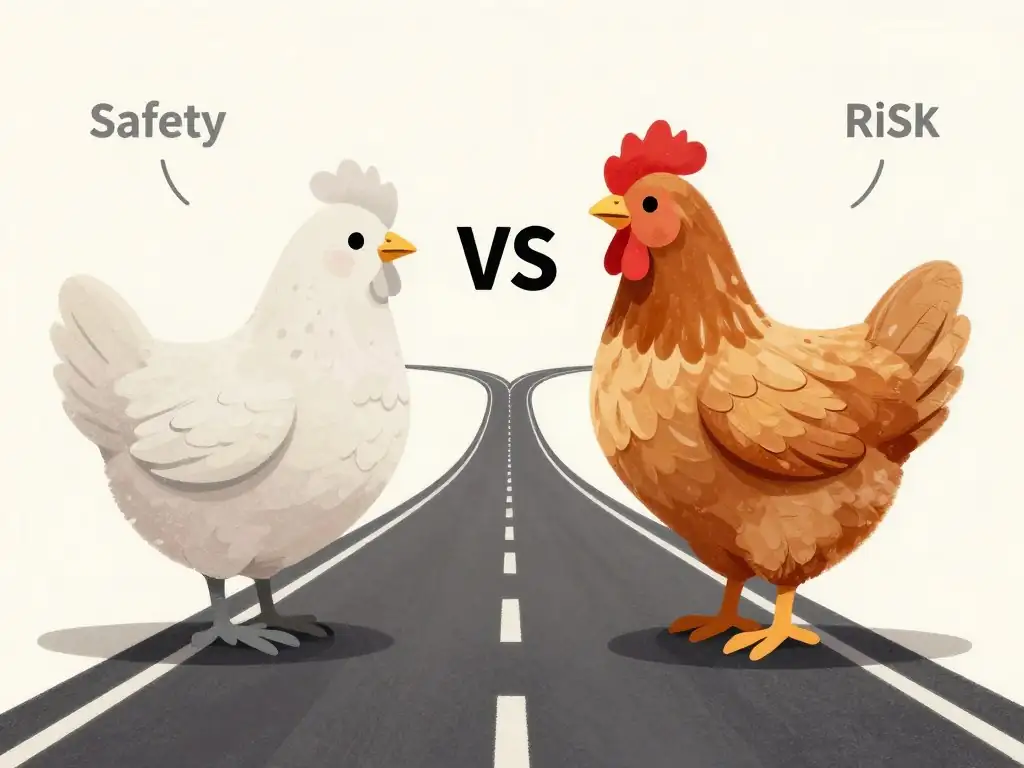
The most crucial skill in Chicken Road Game isn’t selecting tiles—it’s knowing when to stop and cash out your winnings. This decision point after each successful tile reveal creates the psychological core of the gameplay experience, forcing players to constantly weigh the temptation of larger multipliers against the increasing risk of losing everything. This tension between greed and caution creates memorable gaming moments that few other casino games can match.
Research in behavioral economics helps explain why many players struggle with optimal cashout timing. The concept of “loss aversion” suggests that humans feel the pain of losses more acutely than the pleasure of equivalent gains, which should theoretically encourage conservative play. However, this is counterbalanced by the “near-miss effect” and “gambler’s fallacy,” which can lead players to believe they’re “due” for continued success after revealing several safe tiles in a row. These cognitive biases often result in players pushing beyond mathematically optimal cashout points in pursuit of larger rewards.
Experienced players develop disciplined approaches to cashout decisions, often setting predetermined targets before each round begins. For example, you might decide in advance to cash out when the multiplier reaches 3x, regardless of how many tiles remain or how “lucky” you feel. This approach removes emotional decision-making from the equation and helps prevent the common pitfall of chasing ever-larger multipliers until inevitably hitting a bone. You can practice different cashout strategies risk-free using the demo version of Chicken Road Game available on urbangame1.com before applying them in real-money play.
The most effective cashout strategy varies based on your selected difficulty level. With few bones, the optimal approach often involves revealing a large percentage of the grid to maximize your multiplier, as the risk remains relatively low throughout. With many bones, successful players typically cash out much earlier, securing modest multipliers rather than pushing for unlikely larger ones. Finding the right balance for your personal risk tolerance and goals is part of the learning process that makes Chicken Road Game continually engaging over time.
Provably Fair Verification: Ensuring Transparent Gameplay

Chicken Road Game implements a provably fair system that allows players to verify the integrity of each round, ensuring that outcomes are genuinely random and not manipulated by the casino. This transparency is particularly important in games where significant strategic decisions are made mid-round, as players need confidence that the game state wasn’t altered in response to their choices. The provably fair mechanism used in Chicken Road Game represents the gold standard for fairness in online gambling.
The verification process works through a combination of cryptographic elements: a server seed (generated by the casino), a client seed (which players can modify), and a nonce (essentially a round counter). Before each round begins, these elements are combined using a cryptographic hash function to generate a unique signature that determines the placement of bones on the grid. Importantly, this hash is displayed to the player before the round starts, proving that the outcome was predetermined before any tiles were selected.
After the round concludes, players can access the original server seed and verify that, when combined with their client seed and the nonce, it produces exactly the hash shown before play began. This verification confirms that the bone placement was determined before the round started and remained unchanged throughout gameplay. The mathematical nature of hash functions makes it computationally impossible for the casino to generate a specific desired outcome, ensuring genuine randomness.
For players who want to understand this system in depth, many casinos offering Chicken Road Game provide detailed verification tools that walk through the process step by step. Alternatively, you can explore the provably fair system in a risk-free environment using the demo version available on urbangame1.com, which implements the same verification mechanisms as the real-money game. This transparency builds trust and distinguishes Chicken Road Game from less verifiable gambling options.
RTP Analysis: Understanding Your Odds
| Tiles Revealed | Safe Tiles Remaining | Bones Remaining | Success Probability | Cumulative Odds |
| 0 (start) | 15 | 10 | 60% | 60% |
| 1 | 14 | 10 | 58.3% | 35% |
| 2 | 13 | 10 | 56.5% | 19.8% |
| 5 | 10 | 10 | 50% | 6.2% |
| 10 | 5 | 10 | 33.3% | 0.65% |
Return to Player (RTP) is a critical metric in any casino game, representing the percentage of wagered money that theoretically returns to players over time. In Chicken Road Game, the RTP ranges from approximately 95% to 99% depending on the number of bones selected, with fewer bones corresponding to higher RTP values. This adjustable RTP is one of the game’s most distinctive features, allowing players to directly influence their odds of success through their difficulty selection.
The RTP calculation in Chicken Road Game is based on complex probability mathematics that accounts for all possible outcomes given a specific bone count. With just 1 bone on the grid, the RTP approaches 99%, creating an almost even playing field between player and casino. As the bone count increases, the house edge grows accordingly, with 24 bones resulting in an RTP of approximately 95%. This transparent relationship between difficulty and odds allows players to make informed decisions about their preferred risk-reward balance.
It’s important to understand that RTP represents a long-term statistical average, not a guarantee for any individual session. In the short term, actual results can vary dramatically from the theoretical return, creating both winning and losing streaks. This variance is particularly pronounced in high-volatility settings (many bones), where most players will lose quickly, but a lucky few will experience substantial wins that balance the overall return statistics.
For players seeking to maximize their chances of a positive session, selecting fewer bones generally provides the best mathematical expectation. However, this conservative approach comes with a trade-off: lower potential multipliers and potentially less exciting gameplay. Many players willingly accept a slightly lower RTP in exchange for the thrill of pursuing larger multipliers, illustrating that entertainment value often takes precedence over purely mathematical considerations in gambling decisions.
House Edge Calculation: How Bone Count Affects Your Chances

The house edge in Chicken Road Game is directly tied to the number of bones selected, creating a transparent relationship between difficulty and casino advantage. This edge can be calculated by subtracting the RTP from 100%—for example, a 97% RTP corresponds to a 3% house edge. Understanding this relationship helps players make informed decisions about their preferred risk level and expected long-term outcomes.
With minimal bones (1-3), the house edge is extremely low, typically around 1%. This creates one of the most player-friendly environments in online gambling, comparable to optimal blackjack strategy or full-pay video poker. As the bone count increases, so does the house edge, with maximum difficulty (19-24 bones) resulting in an edge of approximately 5%. While this higher edge might seem disadvantageous, it’s the necessary trade-off for the potential of much larger multipliers.
The mathematical basis for the house edge lies in the relationship between risk and reward. In a perfectly fair game, the multiplier for each successful tile reveal would exactly match the inverse of the probability of success. However, Chicken Road Game applies a slight discount to these multipliers, creating the house advantage. This discount is smaller with few bones and larger with many bones, explaining the correlation between difficulty and house edge.
For practical purposes, players should consider the house edge in relation to their bankroll and playing goals. A low house edge (few bones) allows for extended play with minimal expected losses, making it suitable for entertainment-focused sessions or players with limited funds. A higher house edge (many bones) creates more volatility but offers the potential for significant wins, appealing to players who prioritize the possibility of a large payout over long-term expected value.
Betting Range: Flexible Stakes for All Players

Chicken Road Game accommodates a wide range of players through its flexible betting options, typically allowing stakes from as little as £0.10 up to £100 or more depending on the casino. This broad range ensures that everyone from casual players to high rollers can enjoy the game at a comfortable risk level. The minimum stake of £0.10 makes the game particularly accessible to beginners or those who prefer to play with minimal financial exposure.
When selecting your bet size, it’s important to consider both your overall bankroll and your selected difficulty level. With higher bone counts creating more volatility, smaller bets may be prudent to withstand the inevitable losing streaks. Conversely, when playing with few bones and higher RTP, larger bets might be reasonable as the risk of rapid bankroll depletion is lower. Many experienced players recommend limiting individual bets to no more than 1-2% of your total bankroll to ensure sustainable play.
One advantage of Chicken Road Game’s betting structure is that the odds remain identical regardless of stake size. Whether you’re betting £0.10 or £100, the RTP and potential multipliers are exactly the same, ensuring fair treatment for all players regardless of budget. This consistency allows players to adjust their stakes based on comfort level without worrying about being disadvantaged by betting smaller amounts.
For those who want to explore different betting strategies without financial risk, the demo version of Chicken Road Game available on urbangame1.com allows unlimited play with virtual credits. This practice mode is perfect for experimenting with various combinations of bet sizes and bone counts to find your optimal approach before committing real money. Many experienced players regularly use the demo mode to test new strategies or simply enjoy the game’s mechanics without financial pressure.
Mobile Experience: Perfect for On-the-Go Gaming

Chicken Road Game shines on mobile devices thanks to its thoughtful design and HTML5 implementation. The game’s portrait orientation is perfectly suited to smartphone screens, allowing for comfortable one-handed play during commutes or short breaks. The touch controls are precisely calibrated for finger input, with generously sized tiles that minimize the risk of accidental selections even on smaller screens.
The responsive design automatically adapts to different screen sizes and resolutions, ensuring a consistent experience across all devices. On larger tablets, the game takes advantage of the additional screen real estate to display more detailed animations and effects, while on smartphones, the interface remains clean and uncluttered with essential elements prominently positioned for easy access. This adaptive approach ensures that players never need to pinch, zoom, or struggle with tiny controls regardless of their device.
Performance optimization is another key strength of the mobile implementation. The game loads quickly even on older devices or slower connections, with minimal battery drain during extended play sessions. This efficiency is particularly important for a game that encourages multiple quick rounds rather than single long sessions, as players can jump in for a few minutes without worrying about excessive resource consumption or lengthy loading times.
The touch-based interaction feels natural and intuitive, with responsive feedback for every action. Tapping tiles produces immediate visual and haptic responses, while the cashout button is positioned for easy access without accidental presses. This thoughtful control scheme makes split-second decisions feel reliable and precise, which is crucial in a game where timing can significantly impact outcomes. Whether you’re playing on the latest flagship smartphone or an older tablet, Chicken Road Game delivers a smooth, engaging mobile experience.
Demo Play: Risk-Free Learning and Entertainment

Before committing real money, players can experience the full functionality of Chicken Road Game through the free demo version available on urbangame1.com. This practice mode provides an identical gameplay experience to the real-money version, including all difficulty options, multiplier calculations, and provably fair verification. The only difference is that wins and losses are tracked with virtual credits rather than actual currency, creating a risk-free environment for learning and experimentation.
The demo mode serves several valuable purposes for different types of players. For beginners, it offers a pressure-free introduction to the game mechanics, allowing them to understand the basic rules and interface without financial stress. Intermediate players can use the demo to test different bone counts and develop a feel for the varying volatility levels before selecting their preferred approach for real-money play. Even experienced players regularly return to the demo to experiment with new strategies or simply enjoy the game’s mechanics when they don’t wish to risk actual funds.
One particularly useful application of the demo mode is testing extreme settings that might be too risky for your normal bankroll. For example, you might try playing with 20+ bones to experience the high-volatility environment and observe how rarely the massive multipliers actually materialize. This reality check can help temper expectations and encourage more realistic approaches when switching to real-money play.
The demo version also provides an excellent opportunity to practice disciplined bankroll management and cashout strategies without emotional attachment to real money. By setting personal rules and targets in the demo environment, you can develop good habits that transfer to real-money play, potentially improving your long-term results. Whether you’re a curious newcomer or a seasoned player looking to refine your approach, the free demo on urbangame1.com offers valuable insights into this engaging game.
Strategy Guide: Maximizing Your Chances of Success

Conservative Strategy (1-5 bones)
The conservative approach focuses on sustainability and frequent small wins rather than chasing large multipliers. By selecting just 1-5 bones, you create a high-RTP environment (98-99%) where the odds are strongly in your favor for each individual tile selection. With this strategy, aim to reveal 5-10 tiles per round, accepting modest multipliers in exchange for consistent positive outcomes. Set predetermined cashout targets around 2x-3x and stick to them regardless of how “lucky” you feel. This approach is ideal for beginners, players with limited bankrolls, or those who prioritize extended playing time over the thrill of large wins.
Balanced Strategy (8-12 bones)
The balanced approach seeks a middle ground between safety and excitement, offering reasonable odds of success while still providing the potential for satisfying multipliers. With 8-12 bones, the RTP remains respectable (around 97%) while creating enough volatility for memorable winning moments. Aim to reveal 3-7 tiles per round, with cashout targets in the 3x-10x range depending on your risk tolerance. This strategy works well for experienced players who understand the probability shifts as more tiles are revealed and can make disciplined cashout decisions. It provides a good blend of entertainment value and mathematical expectation.
Aggressive Strategy (15-20 bones)
The aggressive approach embraces volatility in pursuit of large multipliers, accepting frequent losses as the cost of chasing significant wins. With 15-20 bones, the RTP drops to around 96%, but the potential rewards increase dramatically. Expect to lose quickly in most rounds, but occasionally experience exhilarating wins when you successfully navigate the dangerous grid. This strategy requires a substantial bankroll (at least 50x your typical bet size) and strong emotional resilience to withstand the inevitable losing streaks. Set cashout targets in the 10x-30x range, or consider a “progressive reveal” approach where you decide after each successful tile whether to continue.
Bankroll Management
Regardless of your chosen strategy, proper bankroll management is essential for sustainable play. Never bet more than you can comfortably afford to lose, and consider the following guidelines based on your selected difficulty:
- For conservative play (1-5 bones), limit individual bets to 2-3% of your total bankroll
- For balanced play (8-12 bones), limit individual bets to 1-2% of your total bankroll
- For aggressive play (15-20 bones), limit individual bets to 0.5-1% of your total bankroll
- Set session loss limits (typically 20-30% of your starting bankroll) and stop playing when reached
- Similarly, set win targets (20-30% profit) and consider banking some winnings when achieved
- Avoid increasing your bet size after losses (chasing losses) or wins (overconfidence)
Remember that no strategy can overcome the built-in house edge in the long run. The goal should be to maximize entertainment value while managing your bankroll effectively, not to treat the game as a source of income. Practice different approaches using the free demo on urbangame1.com to find the strategy that best aligns with your personal preferences and goals.
Probability and Mathematics: Understanding the Odds

The mathematical foundation of Chicken Road Game creates a fascinating probability landscape that evolves with each tile selection. Understanding these shifting odds is crucial for making optimal decisions throughout each round. The basic probability calculation starts with the ratio of safe tiles to total hidden tiles. For example, in a game with 10 bones and 15 safe tiles, your initial probability of selecting a safe tile is 15/25 or 60%.
As you reveal tiles, this probability changes in a predictable way. If your first selection reveals a safe tile, the remaining grid contains 14 safe tiles and 10 bones among 24 hidden tiles, changing your success probability to 14/24 or approximately 58.3%. This probability continues to shift with each selection, generally decreasing as more safe tiles are revealed (assuming you don’t hit a bone). This declining probability explains why the multiplier increases at an accelerating rate—it’s directly tied to the increasing risk.
The cumulative probability of success decreases dramatically as you reveal more tiles. Using the same 10-bone example, the probability of revealing 5 consecutive safe tiles is approximately 6.2%, while the probability of revealing 10 consecutive safe tiles drops to just 0.65%. These cumulative odds help explain why large multipliers are rare—they require beating increasingly unfavorable probability chains.
Expected value (EV) calculations can help determine mathematically optimal cashout points. The EV of continuing equals the probability of success multiplied by the potential new multiplier, compared to the guaranteed value of cashing out immediately. When the EV of continuing drops below your current multiplier, the mathematically optimal choice is to cash out. However, many players deliberately deviate from these optimal points based on personal risk tolerance, playing goals, or simply the thrill of pushing their luck.
Similar Instant Games: How Chicken Road Game Compares

Chicken Road Game belongs to a growing category of instant win games that combine simple mechanics with strategic depth and transparent mathematics. The most direct comparison is with Mines, which features nearly identical gameplay but with a mine-sweeper theme instead of road crossing. Both games offer customizable difficulty through obstacle selection and progressive multipliers, though many players find Chicken Road Game’s playful aesthetic more approachable than the explosive imagery of Mines.
Another popular comparison is with Crash games like Aviator, where players watch a multiplier climb until randomly “crashing” and must cash out before this occurs. While the core tension of deciding when to cash out is similar, Chicken Road Game offers more agency through tile selection rather than simply watching a multiplier. This active participation creates a stronger sense of control and responsibility for outcomes, which many players find more engaging than the passive experience of traditional Crash games.
Plinko represents another instant win alternative, where players drop balls through a pegged board to land in multiplier buckets. While Plinko offers customizable risk levels like Chicken Road Game, it lacks the progressive decision-making that makes each tile selection so meaningful. Once a Plinko ball is dropped, the player has no further input, whereas Chicken Road Game creates multiple decision points throughout each round, maintaining engagement and strategic thinking.
What distinguishes Chicken Road Game within this category is its perfect balance of accessibility and depth. The road crossing theme creates an intuitive visual metaphor that new players immediately understand, while the customizable bone count and transparent probability system provide enough complexity to satisfy experienced gamblers. This combination of approachable design and mathematical sophistication has helped the game find a dedicated audience in an increasingly crowded instant win market.
Responsible Gaming: Important Considerations
Warning: Chicken Road Game, like all gambling activities, carries the risk of addiction and financial loss. Never gamble with money you cannot afford to lose. Set strict time and money limits before playing. If you feel you may have a gambling problem, seek help from organizations like GamCare or Gamblers Anonymous.
While Chicken Road Game offers entertaining gameplay and the potential for wins, responsible approach to gambling is essential. The game’s quick rounds and “just one more try” appeal can lead to extended sessions that exceed planned time and budget limits if not carefully managed. Before playing, establish firm boundaries for both time spent and money wagered, and strictly adhere to these limits regardless of whether you’re winning or losing.
The psychology of crash games like Chicken Road Game can be particularly compelling due to the direct control players have over outcomes. The feeling that “if only I had cashed out one tile earlier” can lead to chasing losses in an attempt to correct perceived mistakes. Remember that each round is independent, and past results have no influence on future outcomes. Avoid the common trap of increasing your bet size after losses in an attempt to recover—this behavior often leads to accelerating losses rather than recovery.
Many online casinos offer responsible gambling tools that can help maintain healthy play patterns. These include deposit limits, loss limits, session time reminders, and self-exclusion options. Take advantage of these features to create additional safeguards beyond your personal discipline. The free demo version of Chicken Road Game on urbangame1.com provides a risk-free alternative when you want to enjoy the game mechanics without financial exposure.
Remember that gambling should be viewed as entertainment with a cost, similar to other leisure activities, rather than as a way to make money. The mathematical reality is that the house edge ensures the casino will profit in the long run, regardless of short-term results or strategy. Approach Chicken Road Game with realistic expectations, play for enjoyment rather than financial gain, and maintain a balanced lifestyle where gambling is just one of many recreational activities rather than a central focus.
Pros and Cons: Balanced Assessment
Advantages
- Customizable risk levels allow tailored gameplay for different preferences
- Transparent mathematics with adjustable RTP from 95% to 99%
- Provably fair system ensures genuine randomness and trustworthiness
- Simple concept with intuitive controls, easy to learn for beginners
- Engaging decision-making with meaningful strategic choices
- Mobile-optimized design perfect for on-the-go play
- Quick rounds suitable for short gaming sessions
- Charming visual design with appealing character and animations
- Free demo mode available for risk-free practice
Disadvantages
- No bonus features or side games to break gameplay monotony
- High-volatility settings can quickly deplete bankrolls
- Addictive gameplay loop may encourage excessive play
- Large multipliers are mathematically rare despite visual prominence
- Limited theme development compared to narrative-driven slots
- No progressive jackpots or community features
- Success ultimately depends on luck despite strategic elements
Final Verdict: Is Chicken Road Game Worth Playing?

Chicken Road Game stands out as one of the most well-executed instant win titles in the current online casino landscape. Its combination of transparent mathematics, customizable risk, and engaging gameplay creates an experience that appeals to a wide range of players. The ability to select your preferred difficulty level through bone count selection is particularly noteworthy, allowing the game to adapt to different risk tolerances and bankroll sizes rather than forcing a one-size-fits-all approach.
The game’s provably fair system and clearly documented RTP rates demonstrate a commendable commitment to transparency that builds trust with players. This mathematical honesty, combined with the intuitive interface and charming visual design, creates an approachable yet sophisticated gaming experience. Whether you’re a casual player looking for entertainment or a serious gambler seeking optimal expected value, Chicken Road Game offers something to appreciate.
For those interested in exploring this engaging title, the free demo version available on urbangame1.com provides an excellent starting point. This risk-free environment allows you to experiment with different strategies and difficulty levels before committing real money. When you’re ready for real-money play, remember to approach the game with responsible limits and realistic expectations.
Ultimately, Chicken Road Game succeeds by finding the perfect balance between simplicity and depth. The basic concept is immediately understandable, yet the strategic decisions and probability calculations provide enough complexity to maintain interest over time. Whether you prefer the steady progress of conservative play or the thrill of high-risk pursuits, this well-crafted instant game delivers an engaging experience that stands among the best in its category.
Frequently Asked Questions
What is the optimal number of bones to select in Chicken Road Game?
There is no universally “optimal” number of bones, as the choice depends on your personal risk tolerance and goals. For the highest RTP (98-99%), select 1-5 bones, which creates a conservative environment with frequent small wins. For a balanced experience, 8-12 bones offer reasonable odds with moderate multiplier potential. For high-risk, high-reward gameplay, 15-24 bones create the potential for large multipliers at the cost of more frequent losses and lower overall RTP (95-96%).
Is there a pattern or strategy to selecting tiles in Chicken Road Game?
The placement of bones is genuinely random and determined before the round begins through the provably fair system. No pattern or selection strategy can improve your odds of finding safe tiles. Some players develop personal systems (like selecting tiles in a specific pattern), but these have no mathematical impact on outcomes. The key strategic element is deciding when to cash out rather than which tiles to select.
How can I verify that Chicken Road Game is fair?
Chicken Road Game uses a provably fair system that allows players to verify the integrity of each round. Before play begins, you’re shown a cryptographic hash generated from the server seed, client seed, and nonce. After the round, you can access these original values and verify that they produce the same hash, confirming that the outcome was predetermined and not manipulated. Most casinos offering the game provide detailed verification tools, or you can explore this system in the demo version on urbangame1.com.
What is the maximum multiplier possible in Chicken Road Game?
The maximum theoretical multiplier depends on the number of bones selected. With few bones (1-3), the ceiling is relatively low, typically in the 2x-5x range. As the bone count increases, so does the maximum potential multiplier, with the highest difficulty settings (19-24 bones) offering theoretical multipliers exceeding 100x. However, these extreme multipliers require revealing nearly all safe tiles in a grid filled with bones—a highly improbable outcome that most players will never experience.
Can I play Chicken Road Game on mobile devices?
Yes, Chicken Road Game is fully optimized for mobile play through HTML5 technology. The game performs excellently on both iOS and Android devices, with a responsive design that adapts to different screen sizes. The portrait orientation and touch controls are particularly well-suited to smartphone play, allowing for comfortable one-handed operation. The game loads quickly even on older devices or slower connections, making it perfect for on-the-go gaming during commutes or short breaks.
